

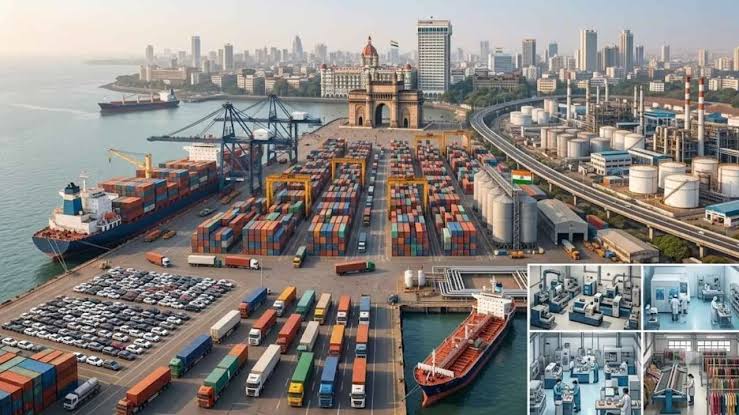
New Delhi, November 15, 2026: India’s merchandise exports recorded a strong increase in October 2026, rising 45.06% year-on-year to US$49.47 billion, compared with US$34.11 billion in October 2025. The latest figures released by the Ministry of Commerce and Industry point to stronger overseas demand across several key sectors, including electronics, engineering goods, petroleum products, chemicals, and gems and jewellery.
The growth comes at a time when global trade continues to face challenges from geopolitical tensions, supply-chain disruptions and changing demand patterns. India’s latest export performance indicates that domestic manufacturers and exporters are expanding their presence in international markets.
India’s Total Exports Reach US$89.99 Billion
According to the government’s trade estimates, India’s combined exports of merchandise and services reached US$89.99 billion in October 2026, registering 29.90% growth compared with the same month last year.
Total imports during the month were estimated at US$110.07 billion, up 16.58% year-on-year. The combined merchandise and services trade balance stood at a deficit of approximately US$20.09 billion.
For the April–October period of FY 2026–27, India's total exports reached an estimated US$568.84 billion, compared with US$487.59 billion during the corresponding period of the previous financial year. This represents growth of 16.66%.
Electronics and Engineering Goods Drive Export Growth
Several manufacturing sectors contributed to the increase in merchandise exports during October.
Key sector-wise figures include:
- Petroleum Products: Exports increased 140.21% to US$8.89 billion, compared with US$3.70 billion a year earlier.
- Electronic Goods: Exports rose 62.70% to US$6.64 billion from US$4.08 billion.
- Gems and Jewellery: Exports increased 40.06% to US$3.21 billion.
- Organic and Inorganic Chemicals: Exports grew 36.20% to US$2.89 billion.
- Engineering Goods: Exports increased 36.01% to US$12.74 billion.
The performance of electronic goods and engineering products is particularly important for India's manufacturing ambitions. Higher exports in these categories can support domestic production, encourage investment in manufacturing facilities and create opportunities for businesses operating across supply chains.
Merchandise and Services Both Contribute
India's export performance is not limited to physical products. Services exports continue to contribute significantly to the country's international trade.
During October 2026, services exports were estimated at US$40.51 billion. For April–October FY 2026–27, services exports reached US$259.78 billion, compared with US$234.18 billion during the same period a year earlier.
Merchandise exports during April–October reached US$309.06 billion, registering growth of 21.96%. Services exports increased by 10.93% over the same period.
This combination highlights the importance of both manufacturing and services in India's export economy. IT services, business services and other professional activities remain important contributors alongside industrial products.
What the Export Growth Means for Indian Businesses
Higher export activity can create opportunities for manufacturers, logistics companies, exporters, suppliers and small businesses connected to international trade.
For MSMEs, stronger overseas demand may open opportunities to become suppliers to larger exporters or directly serve international customers. However, businesses still need to manage production costs, product quality, shipping expenses, currency fluctuations and international compliance requirements.
The growth in electronic and engineering exports also highlights the importance of reliable infrastructure, skilled workers, technology adoption and access to global markets.
Challenges That Remain
Despite the encouraging export figures, India continues to face a challenging external trade environment. Higher imports, particularly of energy and other essential commodities, can affect the overall trade balance.
Exporters also face risks from changing tariffs, global economic uncertainty, shipping costs and competition from other manufacturing economies.
Sustaining export growth will therefore require continued improvements in logistics, manufacturing productivity, trade facilitation and market access.
Conclusion
India's merchandise exports reaching US$49.47 billion in October 2026 mark a significant monthly performance, with electronics, engineering goods and petroleum products among the major contributors. Combined merchandise and services exports also recorded strong year-on-year growth.
The coming months will show whether this momentum can be sustained. Continued growth in manufacturing capacity, services and access to international markets will remain important for India's long-term export ambitions.
Disclaimer: Export figures for October 2026 and the April–October period are government estimates and may be revised. This article is for informational purposes only.