

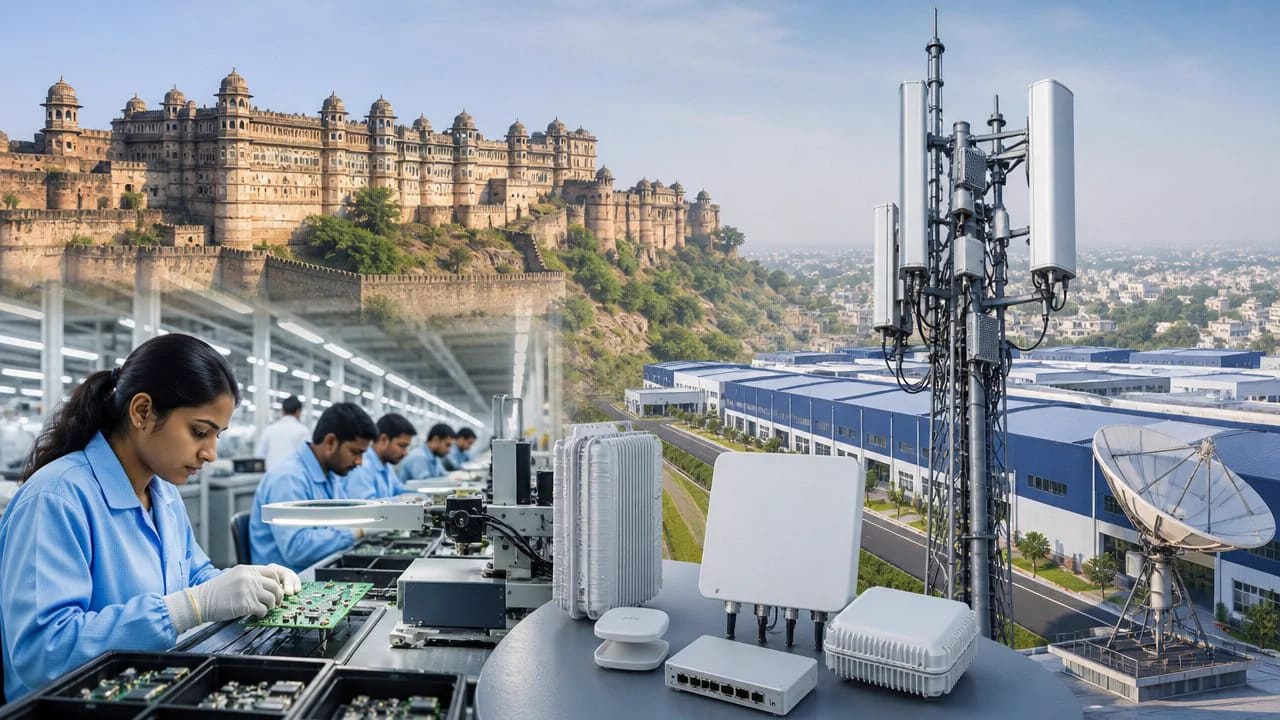
Bhopal, November 19, 2026: India is moving forward with plans to establish an integrated telecom manufacturing ecosystem in Gwalior, Madhya Pradesh, as the government prepares to distribute Letters of Intent (LoIs) for land allotment to prospective investors.
The ceremony is scheduled for November 19 in Bhopal and will be attended by Union Communications Minister Jyotiraditya Scindia and Madhya Pradesh Chief Minister Mohan Yadav, along with representatives from the telecom industry.
The proposed facility is being developed as Asia's first integrated Telecom Manufacturing Zone (TMZ), with a focus on mobile devices, optical fibre, telecom equipment and next-generation 5G and 6G technologies.
The project is intended to strengthen India's domestic manufacturing capabilities and reduce dependence on imported telecom products.
₹493 Crore Central Government Funding for Phase One
The Central Government is providing 100% funding support of ₹493 crore for Phase I of the proposed Telecom Manufacturing Zone.
The Madhya Pradesh Government has provided approximately 170 acres of land free of cost, along with investor-friendly incentives.
A Special Purpose Vehicle (SPV) has also been established to develop the project.
Its ownership structure is:
- Government of Madhya Pradesh: 51% equity participation.
- Department of Telecommunications: 49% equity participation.
The project is expected to provide an integrated environment for manufacturing, research and development, innovation and technology partnerships.
What Will Be Manufactured at the Gwalior Telecom Manufacturing Zone?
The proposed manufacturing cluster is expected to support several important segments of the telecommunications industry.
These include:
1. Mobile Devices
The zone is expected to encourage manufacturing and related activities in the mobile device ecosystem, supporting India's wider electronics manufacturing ambitions.
2. Optical Fibre
Optical fibre is an essential component of modern communication networks. It supports high-speed broadband, enterprise connectivity and telecom infrastructure.
3. Telecom Equipment
The proposed ecosystem will support the production of telecom-related equipment required by network operators and infrastructure providers.
4. 5G and 6G Technologies
The project also aims to encourage research, innovation and manufacturing partnerships related to next-generation communication technologies.
The inclusion of 5G and 6G reflects the government's broader focus on developing domestic capabilities in advanced telecommunications.
Why Is India Investing in Telecom Manufacturing?
India's telecom industry has grown significantly through the expansion of mobile connectivity, broadband services and digital infrastructure.
However, building a competitive domestic manufacturing ecosystem requires investment across multiple stages of the supply chain.
Telecom equipment manufacturing depends on components, electronic systems, specialised materials, engineering expertise and research capabilities.
Developing a dedicated manufacturing cluster could help bring different parts of this ecosystem closer together.
Potential benefits include:
- Greater domestic manufacturing capacity.
- More opportunities for Indian component suppliers.
- Increased investment in telecom research and development.
- Reduced dependence on imported equipment.
- Improved export opportunities for Indian manufacturers.
- New skilled employment opportunities.
The government has positioned the initiative as part of its Aatmanirbhar Bharat strategy.
Investment Opportunities for Telecom Companies
The distribution of Letters of Intent is intended to provide prospective investors with an opportunity to participate in the development of the manufacturing zone.
For telecom equipment manufacturers, electronics companies and technology suppliers, the project could create opportunities to establish production facilities and develop partnerships.
The availability of land, government funding support and an integrated industrial ecosystem may help attract businesses interested in expanding their manufacturing operations in India.
However, the LoI distribution ceremony should not be confused with the completion of the manufacturing zone. Actual investments, construction, factory operations and production will take place through subsequent project-development stages.
How Could Gwalior Benefit from the Project?
The proposed Telecom Manufacturing Zone could strengthen Gwalior's industrial ecosystem and create opportunities beyond traditional manufacturing activities.
Local businesses may benefit from demand for logistics, industrial services, component supply, construction and other supporting activities.
The project could also encourage technical training and skill development for workers interested in electronics and telecommunications manufacturing.
If the planned ecosystem attracts substantial investment, it may support the development of a wider technology manufacturing network in Madhya Pradesh.
The government has described the project as an opportunity to encourage technology-driven entrepreneurship and skilled employment.
India's Wider AI and Technology Manufacturing Ambitions
Telecom manufacturing is closely connected with the growth of Artificial Intelligence, cloud computing and digital infrastructure.
Advanced communication networks are essential for connected devices, enterprise systems, smart infrastructure and future digital services.
India is also working to strengthen its domestic AI capabilities. Readers can explore SalasarMedia's coverage of IndiaAI's EKA-1 and Dhīr indigenous AI models and NVIDIA's growing influence in AI computing to understand how computing and communication technologies are developing together.
A stronger telecom manufacturing ecosystem could complement these wider technology ambitions by supporting the hardware and connectivity infrastructure required by India's digital economy.
What Happens After the LoI Distribution?
The November 19 ceremony is an important project milestone, but several stages remain before the proposed zone becomes a fully operational manufacturing cluster.
These stages are expected to involve:
- Investor participation and land-allotment processes.
- Finalisation of investment and manufacturing plans.
- Development of industrial infrastructure.
- Establishment of manufacturing and research facilities.
- Recruitment, training and commencement of operations.
The pace of implementation and the number of companies that ultimately establish facilities will determine the project's long-term economic impact.
Conclusion
The proposed Telecom Manufacturing Zone in Gwalior represents an important step in India's efforts to strengthen its domestic telecommunications manufacturing ecosystem.
With ₹493 crore in Central Government funding for Phase I, approximately 170 acres of land provided by Madhya Pradesh and a dedicated SPV structure, the project aims to attract companies working in mobile devices, optical fibre, telecom equipment and next-generation 5G and 6G technologies.
The November 19 Letter of Intent distribution ceremony marks progress towards attracting investors, although the project is still moving through its development stages.
If implemented successfully, the initiative could create new manufacturing opportunities, strengthen domestic supply chains and support India's ambition to become a global telecom technology hub.
Disclaimer: This article is based on government information available as of November 19, 2026. The Telecom Manufacturing Zone is a proposed project under development; planned investment, employment and manufacturing outcomes should not be treated as already achieved.